The short answer: The FCC mandate on POTS lines did not shut off every phone line in 2022. The order behind it, FCC Order 19-72, let carriers retire old copper networks at their own pace, and most large carriers are now doing exactly that.
If your business still relies on copper for voice, fax, alarms, or elevator phones, it is worth planning the replacement before a retirement notice arrives. Voice and alarms generally move to VoIP or cellular (LTE/5G). Fax can move to cloud fax.
This guide covers each.
On This Page
What the FCC Mandate on POTS Lines Actually Did
A search for “FCC mandate POTS lines” or “FCC POTS mandate” still returns claims that every POTS line had to be retired by August 2022.
Here’s the thing.
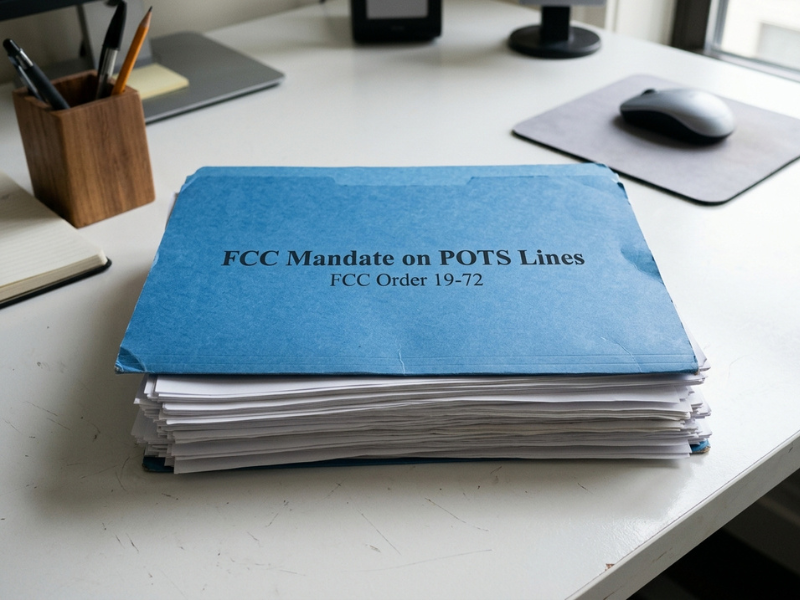
The FCC mandate on POTS lines is one of the most misunderstood changes in business telecom. In 2019, the FCC adopted FCC Order 19-72, which made it easier for carriers to retire POTS lines. Soon after, many providers began warning customers of an FCC landline shutdown, claiming all copper phone lines would go dark by August 2, 2022. That did not happen. Copper lines are still in service in many places.
But the direction is clear, and the pace has picked up. Carriers are filing to retire copper across large parts of their networks, and recent FCC changes shorten the process.
The FCC’s stated aim was to free carriers to invest in modern broadband networks rather than maintain aging copper. Retirement still requires carriers to follow notice and discontinuance procedures, which is why the shift has been gradual rather than overnight.
Why Copper Networks Are Being Retired
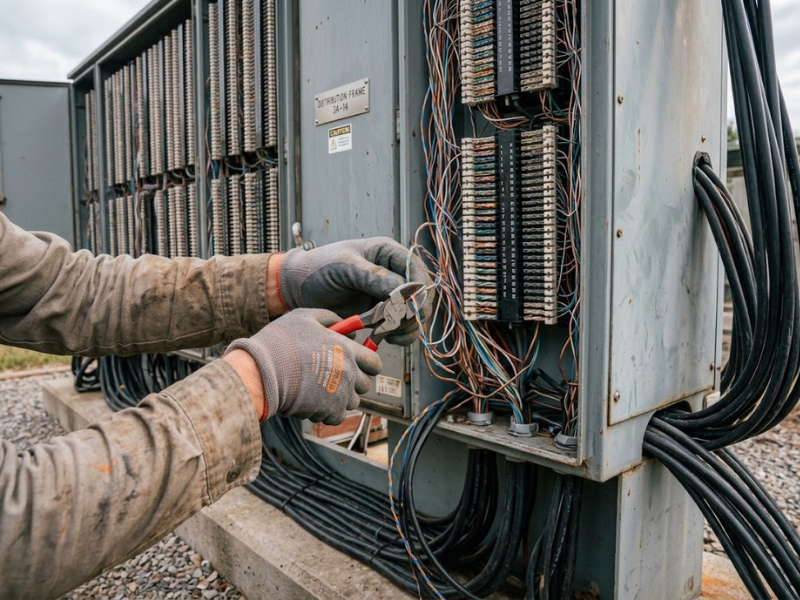
Phone service once ran over copper lines that carried analog signals. Copper can’t keep up with modern communication, whereas fiber and cellular networks carry digital signals with lower loss and higher quality.
Cost is the other driver. Copper degrades, parts are harder to find, and fewer technicians can maintain it. AT&T has said it spends roughly $6 billion a year on direct costs to keep its copper network running. Carriers have asked regulators to let them retire it and move customers to fiber or wireless.
What’s Changed Since 2022
The pace of retirement has increased, and regulators have made it easier for carriers to do so. Industry watchers sometimes call this the FCC POTS sunset, though it is really a series of carrier-by-carrier retirements rather than a single event:
- March 2026 FCC order. On March 26, 2026, the FCC unanimously adopted an order that eases copper decommissioning. It reduced some filing requirements and gave carriers blanket authority to grandfather legacy copper services, meaning those services are no longer offered to new customers.
- Shorter notice windows. Under FCC 26-19, carriers must directly notify affected customers and interconnecting parties before retiring copper. Interconnecting entities and non-residential customers receive at least 180 days’ notice. For copper facilities no longer serving any customers, the minimum notice is 15 days.
- AT&T. AT&T’s stated goal is to retire most of its copper network outside California by the end of 2029. The FCC approved discontinuities covering about 10% of its footprint (roughly 500 wire centers), with additional approvals since. (See: AT&T’s copper retirement plans)
- Verizon. Verizon has shifted from small projects to large filings. An August 2026 FCC request seeks to discontinue copper-based legacy voice service in nine states. The request covers a network capable of serving more than 12 million locations.
- Pushback. Some state regulators, local governments, and consumer groups have asked for more details on where fiber and reliable wireless coverage actually exist before copper is retired.
What this means for your business
Retirement timing varies by carrier and by location, and the notice you receive may be shorter than you expect. It is easier to plan on your own schedule than to react to a deadline.
Related Read: POTS Lines Going Away: What It Means for Business Fax
What Breaks When Your Copper Line Goes
Many business systems quietly depend on a copper line. They may not be obvious until the line is retired. Here are the common ones, and what replaces each.
Device or service | Why it depends on copper | Typical replacement | Where iFax fits |
Fax machines | Dial a phone number and send analog tones over a phone line. | Cloud fax (best fit), or an analog adapter or SIP trunk with T.38 support. | Yes. iFax replaces the fax line. |
Burglar and fire alarm panels | Panels call a monitoring center over a phone line. | Cellular (LTE/5G) communicators or IP-based monitoring. | No. Use a cellular or IP alarm solution. |
Elevator emergency phones | Many use a dedicated analog line to reach a call center. | Cellular or VoIP-based emergency communicators. | No. Use an elevator-approved cellular or VoIP solution. |
Card readers and access control | Some door controllers use a phone line for reporting or remote updates. | IP or cellular connectivity. | No. |
Voice lines and PBX trunks | Traditional business phone service. | VoIP, cloud PBX, or SIP trunking. | No. Use a VoIP provider. |
To be plain about it
iFax solves the fax part of this problem. For voice, alarms, and elevators, VoIP or LTE/cellular is the right fit, and we would point you to those options.
How to Replace Copper, By Use Case
The right replacement depends on what the line was doing. Here is a simple view, followed by details on each.
If the line is used for… | Best-fit replacement | Notes |
Fax | Cloud fax | Keeps fax as a workflow without hardware or a phone line. |
Voice | VoIP, cloud PBX, or SIP trunking | Standard, mature options for business phone service. |
Alarms and elevators | LTE/5G or IP communicators | Confirm requirements with your alarm or elevator provider. |
Fax: Cloud Fax
Many organizations still need fax. Healthcare, legal, financial services, insurance, and government workflows often rely on it to exchange documents with outside parties, even when everything else is digital.
Why is fax fragile on replacement lines
Fax was designed for analog phone lines. Over VoIP or a cellular adapter, the signal can be compressed or delayed, which causes failed or garbled transmissions. Results vary, and many organizations choose to remove the phone line from the equation.
What cloud fax does differently
Cloud fax needs no fax hardware or dedicated phone line. Teams send and receive faxes through email, a web app, desktop or mobile apps, or an API. It suits organizations that fax regularly and at high volume, especially those with multiple users or locations.
Keeping your fax number
It’s also possible to keep your existing business fax number by porting it to a cloud fax service. Start the port before your copper line is disconnected, since numbers can be harder to move afterward. Eligibility depends on the carrier and the type of number.
If fax is at the top of your list:
Consider switching to a service that supports HIPAA-compliant fax workflows, such as iFax. Start free or talk to its experts about moving a fax line before your carrier retires it.
Note: No software alone makes an organization compliant, because that depends on configuration, usage, and the agreements and policies in place.
Voice: VoIP, Cloud PBX, and SIP Trunking
For voice, these are the standard replacements, and iFax does not replace them.
- VoIP: The closest match to a traditional phone experience, using the Internet instead of copper. It works with desk phones, mobile apps, and computers.
- Cloud PBX: A hosted phone system for businesses with multiple lines. It replaces on-site hardware and adds auto-attendants, call routing, and CRM integrations.
- SIP trunking: Connects an existing PBX to the Internet instead of phone lines. It can carry fax too, but T.38 is more reliable than G.711 passthrough, and results vary by provider.
Whichever you choose, confirm how the 911 location is registered and how the system behaves during a power or Internet outage.
Alarms and Elevators: LTE/5G and IP Communicators
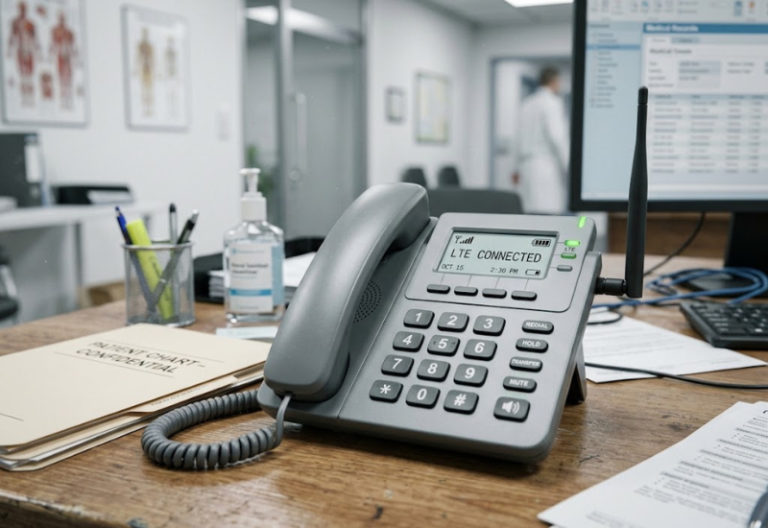
Cellular (LTE or 5G) is often the practical replacement for lines that carry alarm signals or elevator emergency calls, since it doesn’t depend on a wired connection.
These are life-safety systems, so it’s best to check with your alarm monitoring company or elevator contractor first. They know which communicators are approved for your equipment and jurisdiction. Cellular adapters can sometimes carry analog fax, but this is less dependable than cloud fax for ongoing business use.
How to Prepare
Here’s a short checklist you can work through before a retirement notice arrives:
- Inventory everything on copper. List every device and service on your phone lines: fax, alarms, elevators, card readers, payment terminals, and any other equipment.
- Check for carrier notices. Look for retirement or discontinuance notices from your carrier, and ask about timing for your location.
- Match each item to its replacement. Use the use-case view above: cloud fax for fax, VoIP for voice, cellular or IP for alarms and elevators.
- Port fax numbers first. If you want to keep a fax number, start the port before the line is disconnected.
- Confirm life-safety requirements. Talk to your alarm and elevator providers before changing those lines.
- Test before cutover. Run both setups in parallel where possible, and test each device before the copper line is gone.
- Compare costs. Check the latest analog versus digital fax costs for a starting point.
Key Takeaway
The FCC mandate on POTS lines did not set a single deadline, but the “FCC POTS line sunset” is real and speeding up. The practical approach is to find out what depends on your copper lines, then replace each use case with the tool built for it: VoIP for voice, LTE or IP for alarms and elevators, and cloud fax for fax.
If you rely on fax, plan the move and the number port before your line is retired.
Frequently Asked Questions
Will my fax machine stop working?
Not on a specific date set by the FCC. A fax machine stops working when the copper line it uses is retired by your carrier. The machine might still work over VoIP or a cellular adapter, but reliability varies. Cloud fax removes the dependency on the phone line and the fax machine.
Can I keep my fax number?
Often, yes. Many fax numbers can be ported to a cloud fax service. Eligibility depends on the carrier and number type, and it is best to start before your copper line is disconnected.
Is there an FCC landline shutdown date?
No single FCC landline shutdown date exists. The FCC mandate on POTS lines, FCC Order 19-72, gave carriers greater flexibility to retire copper, subject to applicable discontinuance and notice requirements, but did not set a customer shutoff date. Claims about an August 2022 deadline were overstated.
What is FCC Order 19-72A1?
FCC Order 19-72A1 is the published text of the FCC’s 2019 order, commonly shortened to FCC 19-72A1 or FCC Order 19-72. It reduced wholesale obligations for copper and gave carriers more freedom to retire it, but it did not require businesses or households to switch by a set date.