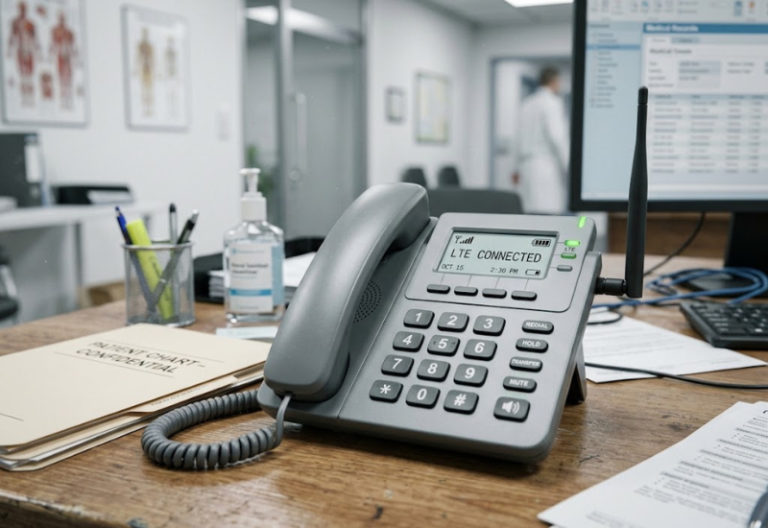

Short Answer: Yes, but not all at once. As of October 2026, US carriers are retiring copper landline service area by area. AT&T’s earliest dates in 2027 are March 15 for Illinois and June 1 for California. Its nationwide target is 2029, while Verizon’s proposed dates await FCC approval. Landline-style phone service continues over fiber, VoIP, and wireless.
By 2027, many providers will have completed a full landline phase-out due to the copper switch-off. While this may seem like the end of an era, it also opens the door to more reliable, faster, and cost-effective communication methods that go far beyond traditional landline phones.
This guide provides the latest developments and the next steps to take.
In This Guide
Latest Developments (Updated October 2026)
- October 23, 2026: Verizon’s earliest authorized discontinuance date passes without FCC approval. This was the earliest date in Verizon’s application covering parts of Arizona, Delaware, New Jersey, New Mexico, Ohio, Rhode Island, South Carolina, Utah, and Virginia (WC Docket 26-227). The FCC pulled it from automatic approval on September 25 (public notice DA 26-1038), and we found no final decision as of October 26.
- June 29, 2026: FCC clears AT&T’s California application. About 184,000 residential customers plus 15,000 business customers could see service end on or after June 1, 2027, though California regulators are contesting the move, so that timing may shift.
- March 26, 2026: FCC adopts the Network and Services Modernization Order (FCC 26-19). The vote lets carriers retire copper faster and underpins the 2026 and 2027 notices. Details are in the regulatory section below.
Are Landlines Going Away in 2027?
Some will, but not all. What’s certain in 2027 is that several carrier notices will result in real disconnections, while the vast majority of AT&T’s copper isn’t scheduled to get discontinued until 2029. The March 2026 FCC order lets carriers move faster, and Verizon’s two pending applications could add more 2027 dates if the FCC approves them. Verizon says it will keep copper in place wherever no FCC-approved replacement exists.
See: Are POTS Lines Going Away and What This Means for Businesses That Fax?
Why Are Landlines Being Phased Out?
Now that we know the answer to “are landlines being phased out,” here is why it is happening.
Outdated technology
As previously mentioned, outdated technology is one of the main reasons landlines will be discontinued. Traditional landlines are built on copper wiring, which is becoming expensive and inefficient to maintain. On the other hand, newer technologies like fiber-optic networks and VoIP not only offer a more cost-effective solution but also deliver a better overall telephone service.
See also: Analog Phone Lines vs VoIP and Copper Broadband Explained.
Government and regulatory push
The landline phase-out is also driven by government and regulatory bodies, which are pushing for more efficient resource use and encouraging the switch to modern communication systems. This move is part of a broader trend of digitalization, which aims to create a more interconnected society with faster, more reliable technologies.
Consumer habits and preferences
The truth is that soon-to-be discontinued landline services simply can’t compete with the freedom and convenience offered by mobile phones and other internet-based communication platforms. Unlike traditional landlines, which are tied to a fixed location, mobile phones provide greater flexibility to call, text, and even video chat from virtually anywhere.
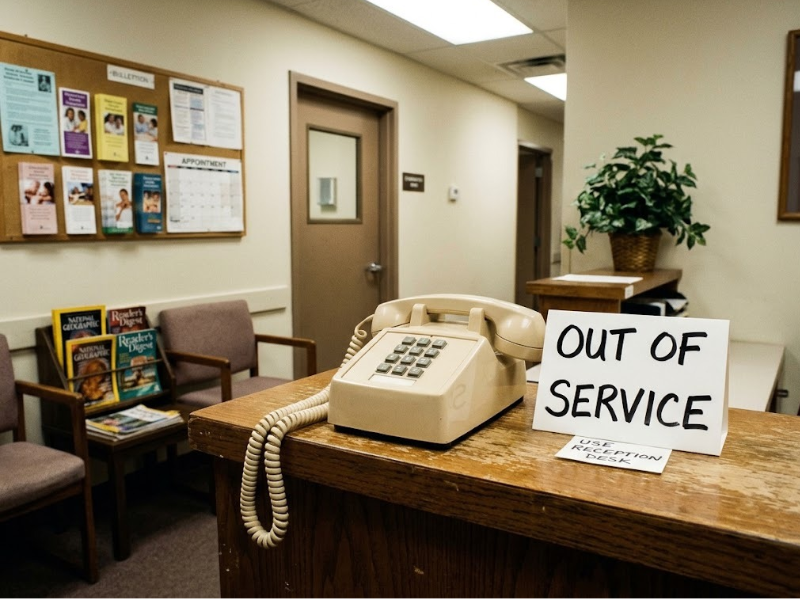
When Will Landlines Stop Working?
Most telecom companies aim to complete the landline switch-off by 2027. Naturally, this makes many people ask: When will landlines be phased out?
While the copper network will be largely retired by then, it doesn’t mean your landline will suddenly stop working. The transition will be gradual, giving users plenty of time to explore better alternatives.
Still, it’s clear that landlines are going away, and the countdown is underway.
Are Phone Lines Being Phased Out for Businesses Too?
Yes. The Verizon applications cover residential and business service, and a companion filing covers legacy business products such as business dial tone lines, ISDN BRI, and PBX trunks. For a business, the bigger risk is often not the desk phone but the equipment quietly riding on a copper line. Before choosing a replacement, take an inventory of:
- Fax machines and fax-enabled MFPs
- Alarm and fire panels
- Elevator and emergency phones
- Card terminals and door or gate entry systems
- Published numbers that customers and partners use, but nobody monitors
What about your fax machine?
A fax machine keeps working until the line behind it is retired. After that, you have two realistic paths: move to cloud fax and retire the machine, or keep the machine and connect it through an analog telephone adapter (ATA).
Either path lets you port your existing fax number, subject to standard eligibility requirements.
Use case: a healthcare practice that still faxes
Example scenario (illustrative only). A medical practice relies on an analog fax line to exchange patient records. When a carrier notice raises concerns about service continuity, the practice ports its existing fax number to iFax and connects its fax machine through an ATA. Staff can also receive faxes through the online portal or email, preserving established workflows while enabling a gradual transition to online fax.
iFax supports HIPAA-compliant workflows when configured appropriately, with a BAA available. Talk to sales to learn more.
What Are the Best Alternatives to Landlines?
If you’re worried about landline phones being switched off in 2027, you shouldn’t be.
While it might be difficult to say goodbye to landline phones, the discontinuance of landline services will pave the way to newer, more modern communication platforms.
VoIP (Voice over Internet Protocol)
VoIP services like Google Voice, Vonage, and Ooma allow you to make voice calls using your broadband internet connection. These services make a great alternative to discontinued landline services as they not only offer a cost-effective and flexible solution but also often come with additional features like voicemail, call forwarding, and international calling at lower rates.
Fiber-optic connections
If you want to upgrade from a traditional landline to something more modern but still want the reliability and familiarity of a home phone, fiber-optic phone services are an excellent option. Many fiber-optic providers like AT&T Fiber and Verizon Fios offer bundled services, allowing consumers to combine internet, television, and phone services for added convenience and cost savings.
Online communication apps
There is a great abundance of online communication apps that can be a better alternative to traditional phone lines. Popular apps like WhatsApp, Skype, and Zoom allow you to make calls, send texts, and even engage in video chats from any device with an internet connection. The best part? They’re free.

How to Prepare for the Landline Phase-Out
With the landline phase-out well underway, it seems like landlines will be discontinued completely by 2027. While you still have time, it’s a good idea to start preparing for the shift as soon as possible.
Stay informed
Keep an eye out for updates from your service provider regarding the timeline and specific details of the landline phase-out. It’s important to know the details so you’re not caught off guard by an unexpected telecom service interruption.
Review your service contracts
Are landlines still available? Yes, for now, but service terms may change soon. Take the time to review the fine print and determine if any changes affect the terms of your contract. If necessary, contact customer support to discuss options such as switching plans or upgrading to digital alternatives before your current plan is phased out.
Educate your household or business
Whether you’re running a business or simply managing a household, make sure that you keep everyone in the loop about the potential changes that come with landline phones being phased out. Introduce and onboard them to the new communication tools you’re adopting. This will ensure a seamless transition and help everyone adjust with minimal disruption.
The discontinuance of landline services surely feels like the end of an era. After decades of being the beating heart of communication, it can be a bit difficult to envision a future with discontinued landline services. But as with many other things, saying goodbye to the old also means saying hello to newer and much-improved communication technology.
Landline Phase Out Outside the US: The UK
The UK is retiring its traditional PSTN landline network. Openreach says the PSTN will close on January 31, 2027, with the date unchanged after an earlier delay from December 2025. In September 2026, it confirmed a temporary Emergency Voice and Access Continuity (EVAc) service for eligible residential and business single lines that have not migrated by then.
Where technically possible, Openreach will also preserve eligible linked broadband services separately from EVAc, with work on remaining broadband lines expected to begin from mid-April 2027 using a short-term solution. EVAc is a limited, temporary safety net rather than a substitute for migration, so moving to a digital phone service before the deadline remains the safer path.
Landlines Are Going Away. Keep Faxing by Switching to the Cloud.
As copper lines are being retired, the smartest move for fax is to act early and on your own terms. With iFax, you can send and receive faxes from your computer, phone, or email while keeping your existing number through porting.
If your team still prefers the machine, connect a compatible fax machine through an ATA. Talk to our team to plan your fax migration.
Frequently Asked Questions
Are landlines going away in 2027?
Some will. More carrier notices take effect in 2027, including AT&T dates in Illinois (March 15) and California (June 1), AT&T’s goal of no copper customers in its wireless-first areas by year-end, and the UK’s January 31 PSTN closure, but AT&T’s target for nearly all other copper is 2029, and Verizon says it will keep copper where no approved replacement exists.
Are landline phones being phased out?
The handsets aren’t. The copper line behind many of them is. A corded or cordless phone keeps working if you connect it to a replacement service through the right adapter or base unit. However, alarms, medical alert devices, and fax machines need a compatibility check.
Are landlines going away completely?
Landlines are not disappearing overnight, but landlines are going away as part of the copper network shutdown. Most major telecom carriers worldwide have confirmed that analog copper-based phone lines will be replaced with digital, VoIP, or fiber-optic alternatives. This ensures clearer calls, fewer outages, and more efficient network maintenance.
How much longer will traditional landline telephone service be available?
For many customers, a few more years at most. AT&T’s target is 2029, and some areas will go sooner. Where an approved replacement isn’t available, Verizon says copper stays.
If you are comparing what is left, including cost, and what works without broadband, see our guide to landline phone services without Internet.
Are phone lines being phased out for businesses, too?
Yes. The Verizon filings cover business lines, and fax machines, alarms, elevator phones, and card terminals are often affected. Best to do an inventory of what runs on each line first.
Will my fax machine still work after the landline phase-out?
It works until your line is retired. After that, you can keep the machine running by connecting it to a device called an ATA or move completely to a cloud faxing service like iFax. Ask any replacement provider whether fax is supported.
Do I need the Internet to use a modern telephone service after landlines are phased out?
For VoIP-based home phone services, yes—an internet connection is required. Fiber-based phone service also uses digital infrastructure, meaning your phone relies on your fiber modem rather than copper wiring. In areas where reliable Internet access is limited, mobile-based home phone units may serve as substitutes for discontinued landline service.
Is there a replacement for copper landlines if I don’t want VoIP?
If you prefer a phone that feels like a traditional landline but doesn’t rely on the Internet, there are mobile-based home phone systems provided by wireless carriers. These systems plug your home telephone into a base station that uses cellular networks instead of a copper line. This option appeals to users who want a familiar phone but without the need for broadband.
Are emergency calls still reliable without landlines?
Yes. Modern alternatives such as VoIP, fiber phone service, and mobile-based home phones still support 911 or emergency dialing. However, unlike copper landlines, digital systems typically require power and may not work during long outages unless you have a backup battery installed.
What should I do now that landlines are being phased out?
Here are the best steps to take:
- Check your provider’s timeline so you know when landlines will be phased out in your area.
- Ask whether your current landline phone can connect using an adapter.
- Explore VoIP, fiber phone service, or mobile-based home phone units.
- Educate your household or office staff about the upcoming change.
Preparing early ensures you won’t experience sudden service interruptions.