
Quick Answer: Twilio discontinued its Programmable Fax API, restricting access for all accounts on December 17, 2021, after giving customers about a year’s notice and pointing them toward a suggested migration partner. Any business or developer still relying on Twilio Fax needs to migrate their integration to a different provider. This means evaluating a replacement API, re-mapping webhook and delivery-status logic, and confirming secure, compliant transmission before switching over.
Many teams are still discovering that their Fax API calls are failing months or years later, especially if the integration was set up by a developer who has since moved on.
Here’s what happened, why it happened, and how to move your fax workflow to a platform built to support it in the long term.
On This Blog
Why Was the Twilio Fax API Discontinued?
Twilio launched Programmable Fax to let developers send and receive faxes through the same REST API model used for its messaging and voice products. Twilio ultimately decided to discontinue its Programmable Fax for all accounts, effective December 17, 2021, citing a difficult decision made after weighing product priorities for that same year and beyond.
Any Fax API calls made through Twilio after this date began failing outright. The cloud-based communication platform also directed existing customers to a migration partnership with mFax by Documo to ease the transition.
The Problem With Losing a Fax API Mid-Workflow
When a Fax API disappears, it’s rarely just an inconvenience. Teams that had built Twilio Programmable Fax into intake forms, EHR/EMR workflows, order processing, or automated document routing generally had to:
- Evaluate and select a replacement API before the cutoff date
- Re-map webhook and delivery-status logic to a new provider
- Re-verify that sensitive documents (like PHI or financial records) were still being transmitted securely and compliantly
- Complete the switch within a fixed window, since Twilio’s notice came with a hard cutoff date rather than open-ended support
If your team is still running into failed Fax API calls, or you’re simply doing due diligence before building new fax functionality, it’s worth choosing a provider designed for the long term.

Why iFax Is a Strong Twilio Fax API Alternative
iFax offers a Programmable Fax API built specifically for businesses and developers who need to embed reliable fax functionality into existing systems and software.
Here’s how it compares to what teams previously relied on with Twilio:
A REST API built for production use
iFax’s Fax API supports sending and receiving documents programmatically, so teams migrating away from Twilio’s programmable fax model can rebuild similar workflows without having to start from scratch conceptually.
Delivery visibility
Knowing whether an online fax succeeded or failed matters for compliance and operations. iFax supports real-time delivery status tracking so applications can confirm transmission rather than guessing.
HIPAA-compliant document exchange
For healthcare software, revenue-cycle platforms, and any application handling PHI, secure and compliance-conscious transmission is a requirement, not a nice-to-have. iFax’s healthcare fax solution is built with the most robust security and privacy practices in mind, which matters if your original Twilio Fax use case involved faxing sensitive medical records and other critical documents.
Built to scale with existing systems
Whether you’re sending a handful of faxes a day or supporting a high-volume, multi-tenant platform, iFax’s infrastructure is designed to handle growing document volumes and support multiple integrations.
Migrating From Twilio Fax to iFax
If you’re planning a fax migration, the process generally comes down to three steps:
1. Audit your existing Twilio API integration for fax
Identify where API calls are triggered, what data is being sent, and how delivery status is currently handled (or currently failing).
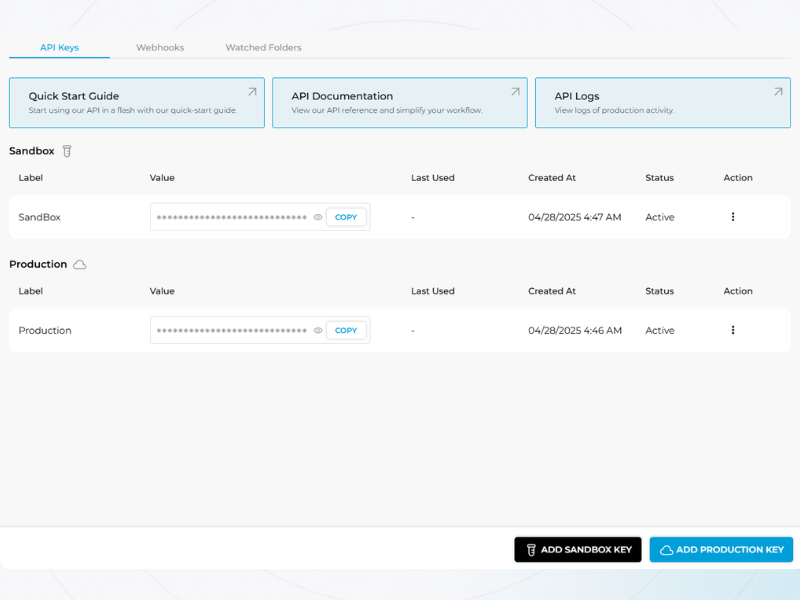
2. Set up your iFax API access
Also, review the available documentation and endpoints for sending, receiving, and tracking faxes.
3. Re-point your application’s fax logic to iFax
Test in a non-production environment, and confirm delivery tracking and error handling behave as expected before going live.
Because the underlying concept (REST-based online fax sending and receiving) is similar to what Twilio originally offered, most teams find the conceptual migration straightforward, even if the specific endpoints and authentication steps differ.
What to Look for in a Twilio Fax API Alternative
Twilio is unlikely to bring back its Fax API. Continuing to build around a discontinued service isn’t a sustainable option for any business that heavily depends on fax in its document workflows. If you’re evaluating a Twilio fax API alternative, your next best step is to choose a provider where fax is a core offering, backed by purpose-built features and support.
iFax’s Fax API is built around exactly that use case: giving developers and businesses a dependable way to embed HIPAA-compliant fax in modern software without traditional hardware.
Ready to see how it fits into your stack?
Explore the iFax API Documentation or connect with our API specialists to get started.