Quick Answer: Regulatory compliance in healthcare is the process of following the laws, regulations, and industry standards that govern how healthcare organizations manage patient care, data, billing, and workplace safety.
It covers requirements such as HIPAA (PHI safeguards), OSHA (workplace safety), the False Claims Act and Stark Law (billing and anti-fraud), and CMS conditions of participation (quality and licensing). Covered entities that fail to meet these standards could face fines, lawsuits, loss of licensure, and reputational damage.
Table of Contents
Key Things to Know About Healthcare Regulatory Compliance
- What it is — Aligning an organization’s policies and daily operations with applicable healthcare laws and regulations.
- Who it applies to — Hospitals, clinics, private practices, insurers, and any business associate that handles patient data.
- Main areas covered — Patient privacy (HIPAA), billing accuracy, workplace safety, clinical quality, and fraud prevention.
- How it’s managed — Through a formal compliance program with written policies, staff training, audits, and a designated compliance officer.
- Why it matters — Non-compliance can trigger civil penalties, criminal charges in severe cases, and loss of the public’s trust.
Healthcare is among the world’s most heavily regulated industries, and for good reason. Patient data, medical decisions, billing practices, and workplace safety all carry real consequences when something goes wrong. The sections below break down what healthcare regulatory compliance looks like in practice, how compliance programs are structured, and why HIPAA compliance in particular sits at the center of most healthcare compliance efforts.
Breaking Down Healthcare Compliance
Healthcare compliance is often used interchangeably with medical compliance. Both refer to the same core idea: aligning an organization’s policies, procedures, and daily practices with applicable laws and regulations. This isn’t a single checklist. It’s an ongoing discipline that touches nearly every department, including:
- Patient privacy and data security (governed largely by HIPAA)
- Billing and coding accuracy (to prevent fraud, waste, and abuse)
- Workplace safety (OSHA standards for clinical environments)
- Clinical quality and licensing (state medical boards, CMS conditions of participation)
- Anti-kickback and fraud prevention (Stark Law, False Claims Act)
Since these areas constantly shift and intersect with one another, staying compliant with healthcare regulations isn’t something you can handle with a single policy update and call it done. It takes ongoing monitoring, consistent staff training, solid documentation practices, and the flexibility to adjust as the rules themselves evolve.
Why a Compliance Program Matters
Most healthcare organizations formalize this effort through a structured compliance program. A compliance program is used to identify legal and regulatory risks before they become violations, establish internal controls, train staff on proper procedures, and create a clear process for reporting and correcting problems when they occur.
The Office of Inspector General (OIG) has long encouraged healthcare providers to adopt structured compliance programs built around a few consistent elements:
- Written policies and procedures
- Designated compliance leadership (often a Compliance Officer)
- Ongoing staff education and training
- Internal monitoring and auditing
- Clear reporting channels for concerns or violations
- Consistent enforcement of standards
- Prompt response to detected problems
A well-run compliance program does more than protect healthcare organizations from penalties. It builds trust with patients, payers, and regulators by showing that the organization takes its regulatory obligations seriously, reinforcing credibility in an industry where trust is essential.

HIPAA Compliance: The Cornerstone of Patient Privacy
When people ask what regulatory compliance in healthcare looks like in practice, HIPAA compliance is often the first example that comes to mind. The Health Insurance Portability and Accountability Act sets national standards for protecting patient health information, commonly known as protected health information (PHI).
HIPAA compliance requires healthcare organizations and their business associates to:
- Establish administrative, physical, and technical safeguards to secure PHI
- Limit access and ensure only authorized personnel can access patient data
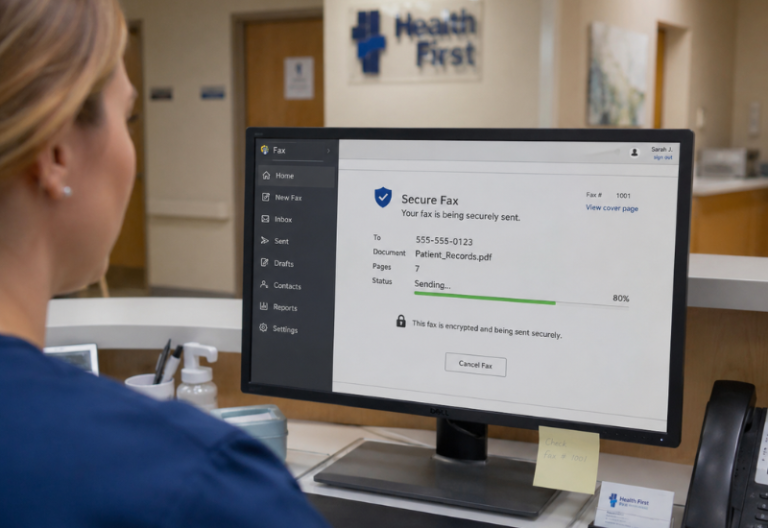
- Ensure secure transmission of health records, including faxed or digitally shared documents
- Inform affected individuals and regulators in the event of a data breach
- Train employees on privacy and security obligations
Non-compliance with HIPAA carries the risk of civil penalties that could cost thousands or even millions of dollars, depending on the nature, severity, and duration of the violation. It can also erode trust and reputation, potentially costing the organization more in the long term.
Common Challenges in Healthcare Regulatory Compliance
Even well-intentioned organizations with strong compliance practices can encounter obstacles. Several recurring challenges include:
- Frequent regulation changes at the federal, state, and local levels
- Fragmented systems that make it hard to track where sensitive data lives
- Staff turnover, which requires repeated training efforts
- Limited compliance resources, especially in smaller practices
- Manual processes for documentation and record-sharing that increase the risk of human error
These challenges are exactly why many organizations turn to dedicated tools and healthcare compliance solutions rather than relying solely on manual tracking. Compliance software, secure communication platforms, encrypted fax services, audit-tracking systems, and staff training platforms all help reduce the administrative burden. Together, they help improve accuracy and accountability.

How Organizations Build a Culture of Compliance
Healthcare regulatory compliance is most effective when it’s embraced as a shared organizational value rather than confined to a single department. Leading organizations generally:
- Appoint a compliance officer or committee with real authority
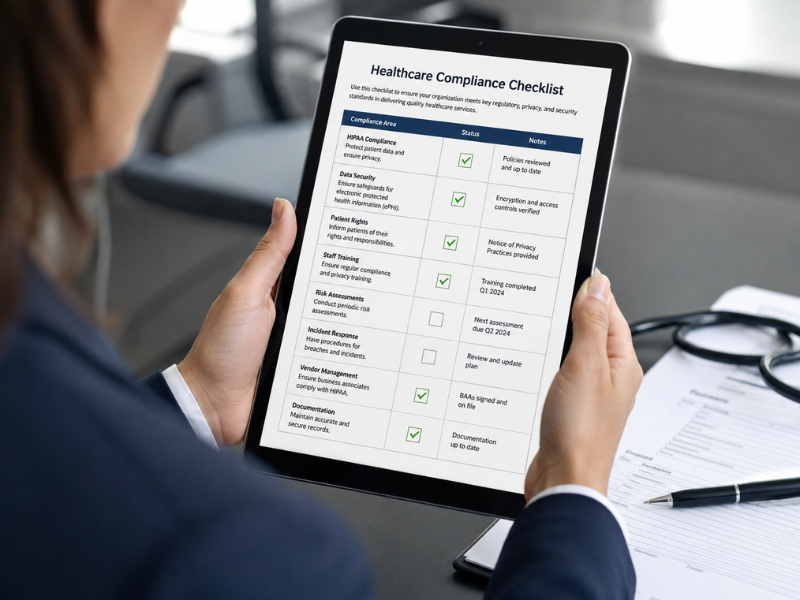
- Conduct regular internal audits and risk assessments
- Ensure policies are written clearly and are easy for frontline staff to follow
- Encourage anonymous reporting of potential violations without fear of retaliation
- Revisit and update procedures to align with evolving regulations
This kind of proactive culture reflects genuine operational experience, the kind gained by organizations that have navigated audits, near-misses, and regulatory updates firsthand, not just theoretical knowledge of the rules. HIPAA compliance advisors, such as Compass IT Compliance, often point out that internal reviews work best when paired with a formal IT risk assessment, since operational gaps are far easier to catch in-house than during a surprise regulatory audit.
Key Takeaway
So, what is regulatory compliance in healthcare? It’s the ongoing commitment to operating within the legal and ethical standards that protect patients, staff, and the integrity of the healthcare system. It spans everything from HIPAA compliance and billing accuracy to workplace safety and fraud prevention, all tied together through a formal compliance program.
Meeting these obligations often comes down to the small operational details, such as how patient records are transmitted among providers, labs, and insurers.
Secure, HIPAA-compliant document-sharing tools, such as encrypted healthcare fax services like iFax, are often part of the broader infrastructure organizations rely on to protect sensitive health information while remaining compliant with federal privacy standards.
Ultimately, healthcare compliance isn’t a box to check once a year. It’s a continuous process that, when done well, protects patients and strengthens the trust that makes quality healthcare possible.