Healthcare information exchange (HIE) is the secure electronic sharing of patient records, such as referral forms, diagnostic reports, and care summaries, between hospitals, clinics, laboratories, pharmacies, and health plans.
It relies on interoperability standards like HL7 FHIR and Direct Secure Messaging, with TEFCA expanding nationwide exchange. However, because many systems still cannot communicate directly, healthcare providers often use HIPAA-compliant healthcare fax solutions to exchange patient information.
This guide explores how healthcare information exchange works and where secure fax fits alongside HIE.
On This Page
What Is Healthcare Information Exchange?
In practice, it answers a simple question. When a patient arrives at an ER, a specialist’s office, or a therapy clinic, can the care team see what happened to that patient elsewhere?
The term is used in two ways. The term “health information exchange” pertains to the activity of sending or retrieving electronic records. The capitalized Health Information Exchange (HIE), sometimes called a Health Information Organization, is the regional or state network that operates the technical and legal infrastructure that enables the exchange. HIE infrastructure underpins federal programs, including TEFCA and the ONC/ASTP’s Promoting Interoperability Program, making it a foundational component of value-based care and effective care coordination.

How Electronic Data Exchange in Healthcare Works
Electronic exchange of healthcare records generally happens through three models:
Directed (Push) Exchange
Directed exchange, also called push exchange, sends patient records directly to a known recipient. It is commonly used for referrals, consultation notes, imaging reports, and discharge summaries. This model typically relies on direct secure messaging for protected transmission.
Query-Based (Pull) Exchange
Query-based, or pull exchange, allows authorized providers to search for and retrieve patient records from participating organizations as needed. It is commonly used in emergency and urgent care settings, where quick access to medical history supports clinical decisions.
Consumer-Mediated Exchange
Consumer-mediated exchange puts patients in control over sharing their health information. Using patient portals or mobile apps, patients can access their records and choose to share them with healthcare providers or caregivers, improving care coordination across organizations.
All three healthcare information exchange models rely on shared interoperability standards such as HL7 FHIR, C-CDA, and the Direct Protocol. Since 2023, TEFCA has provided a unified legal and technical framework that enables organizations to exchange data through participating Qualified Health Information Networks (QHINs). However, many smaller practices, behavioral health providers, and long-term care facilities are still not fully connected.

How Is Health Information Exchange Used in Healthcare
In day-to-day operations, health information exchange supports:
- Emergency care — Emergency department clinicians query networks for medication history and recent encounters.
- Care transitions — Hospitals send discharge summaries to the providers who will be managing the patient next.
- Referrals — Primary care shares history and imaging with specialists ahead of visits.
- Public health reporting — Labs and providers report immunizations and communicable disease data.
- Prior authorization — Payers exchange clinical documentation to support coverage decisions.
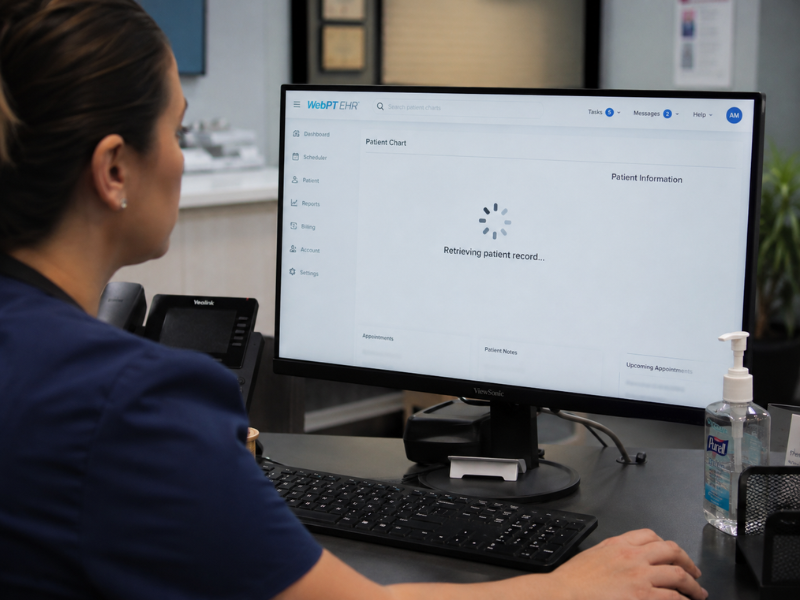
Each use depends on the receiving organization being able to find, send, receive, and integrate outside data. The four domains ONC/ASTP uses to measure hospital interoperability. Integration is often the hardest. Even when records are received electronically, staff often have to manually compare and verify the information against the patient’s local medical record.
Healthcare Records and the Interoperability Gap
While EHR adoption is nearly universal among U.S. hospitals, full interoperability is not. ONC/ASTP data show that roughly three in ten hospitals still can’t engage in all four interoperability domains with at least one exchange partner, and fewer than one in three ambulatory facilities report being connected to an HIE as of 2024.
The biggest gaps in data sharing are with long-term care, post-acute care (rehabilitation), and behavioral health providers, even though they play an important role in helping patients move between different stages of care.
This is where healthcare data exchange strategy meets operational reality. A hospital can be fully TEFCA-connected and still be unable to electronically reach the skilled nursing facility down the street or the small independent practice without a certified EHR. When that happens, staff fall back on the one channel every organization can reach—the fax number.
Why Healthcare Records Still Move by Fax
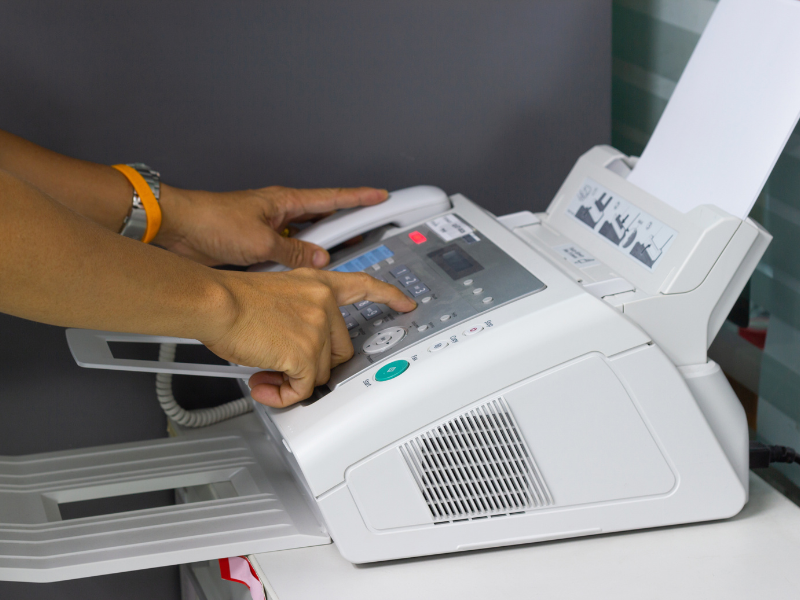
Although healthcare interoperability has improved, many providers still rely on fax because not all EHR systems can exchange information seamlessly, particularly across organizational boundaries.
Two factors keep fax in use. First, providers must communicate with partners that still use fax, including specialists, laboratories, and health insurance companies. Second is regulatory recognition. Under the HIPAA Security Rule, it is treated as an acceptable transmission method for protected health information (PHI) when appropriate safeguards are in place. It provides built-in delivery confirmation, which many organizations still treat as their audit trail.
Ensuring healthcare document fax compliance
Because fax remains part of how healthcare information gets shared, organizations need clear safeguards around it. Healthcare document fax compliance means protecting fax records with the same level of care as any other PHI transmission.
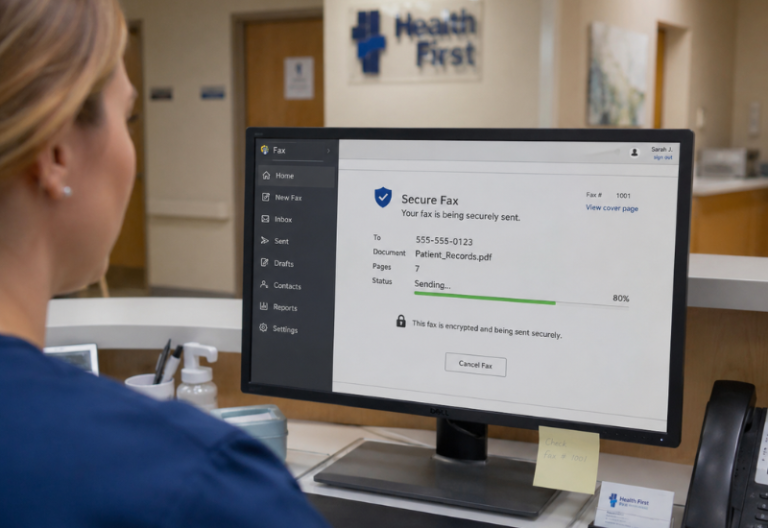
One of the most secure ways to ensure compliance in fax document exchange is to switch from traditional fax machines to cloud-based healthcare fax platforms. These solutions track and confirm delivery, store records in accordance with retention rules, and maintain detailed logs of who sent or viewed each document. Online fax solutions like iFax also support broader HIPAA requirements, including encryption in transit and at rest.
As HIE adoption grows, fax will continue to play a valuable role.
Key Takeaway
Healthcare information exchange is maturing under TEFCA and FHIR-based standards, but full interoperability across every care setting is still years away. Until every referral partner and post-acute facility is electronically connected, secure fax will continue to serve as the fallback layer. Modern HIPAA-compliant fax provides a practical solution today as healthcare organizations continue to connect to HIEs and TEFCA.
Frequently Asked Questions
What do health information exchanges do?
Health Information Exchanges (HIEs) enable hospitals, clinics, pharmacies, laboratories, and insurance providers to securely share patient records electronically, even when they use different EHR systems.
They help match patient records, manage consent, and securely exchange information such as medication histories and discharge notes. Many HIEs also connect to Trusted Exchange Framework and Common Agreement (TEFCA), making it easier to share health data across organizations and regions.
What is electronic data exchange in healthcare?
Electronic data exchange is the secure sharing of patient health information between healthcare systems using standardized digital formats instead of paper records, phone calls, or manual data entry.
It typically uses standards such as HL7 FHIR, C-CDA, and the Direct Protocol. Data can be shared by sending records directly to another provider, retrieving records on demand, or letting patients decide who can access their health information.
Is fax considered part of healthcare information exchange?
Fax isn’t a structured HIE standard like FHIR. Still, it’s one of the most common methods for transmitting healthcare records in practice, serving as a fallback channel where full interoperability doesn’t yet exist. It’s considered an acceptable transmission method under HIPAA when proper safeguards are in place.
Where Secure, Cloud-Based Fax Fits Alongside HIE
While healthcare information exchange continues to expand, many providers still rely on fax to exchange records with organizations that lack full interoperability.
Modern medical fax solutions bridge this gap by replacing paper-based fax with secure, encrypted digital transmission that integrates with EHRs, EMRs, and other healthcare systems.
HIPAA-compliant solutions like iFax help automate document workflows with features such as AI-powered data extraction, EHR integration, API connectivity, 256-AES encryption, and audit trails. It complements HIE rather than replacing it, enabling secure healthcare data exchange with partners that are not yet fully connected to TEFCA or other interoperability networks.