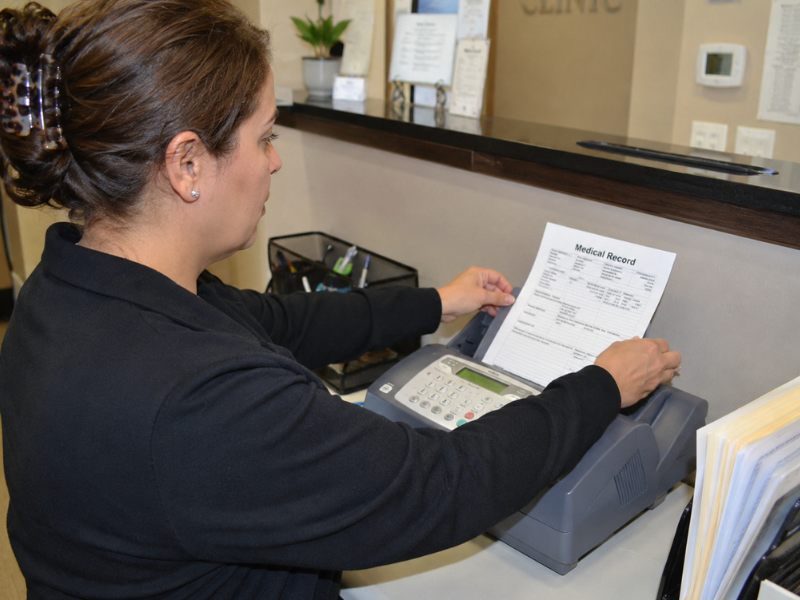
Fax is still widely used in healthcare because HIPAA permits faxing, provided covered entities and their business associates meet the compliance requirements for faxing protected health information (PHI).
Although electronic data exchange has improved, healthcare interoperability remains incomplete, and many organizations still rely on systems that do not connect easily with one another.
This article explains why many healthcare providers still rely on faxing to maintain secure communication and document exchange.
Table of Contents
Why Healthcare Still Relies on Faxing
The honest answer is that fax solved a problem decades ago that modern healthcare technology still hasn’t fully solved—getting a document from one organization to another when the two sides don’t share a system.
Healthcare has no shortage of digital systems, but getting them to communicate remains a challenge. Hospitals, clinics, pharmacies, insurers, and other organizations often use different platforms that do not always exchange information seamlessly.
That gap is why fax continues to play a role in healthcare. It provides a simple way to send documents between organizations, even when their systems do not fully interoperate. As long as proper safeguards are in place, the Health Insurance Portability and Accountability Act of 1996 (HIPAA) allows healthcare providers to use fax to share PHI.
While electronic exchange methods continue to improve, fax remains a practical option for many healthcare document workflows.
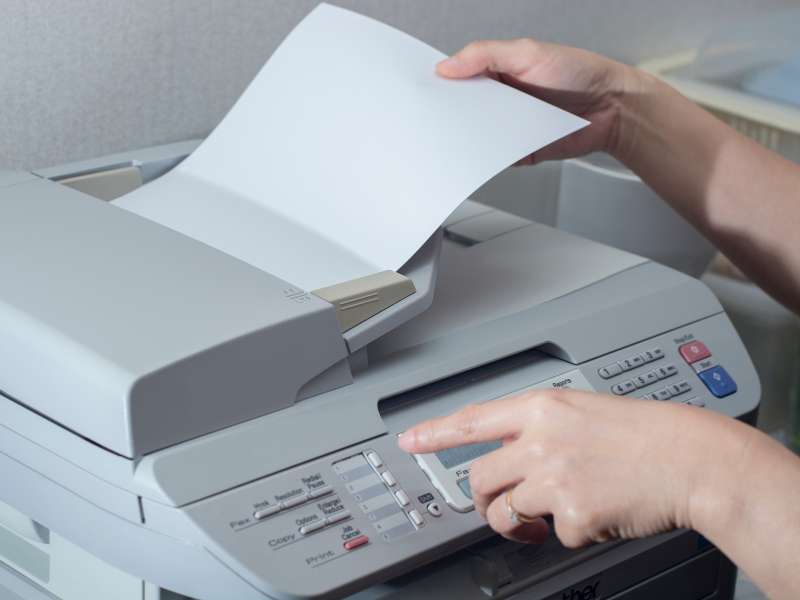
Why Do Doctors Still Use Fax? Faxing Medical Records in Practice
For a physician’s office, faxing medical records is often less about preference and more about interoperability. A single practice cannot simply stop faxing if specialists, hospitals, laboratories, or payers still rely on it, because full electronic exchange remains incomplete across many clinical settings. Healthcare information exchange networks evolve as connected organizations adopt compatible alternatives, but full interoperability among providers and trading partners remains incomplete.
Fax also provides workflow visibility through transmission confirmations, which create a time-stamped record that a document was sent successfully. Still, those confirmations do not guarantee that the recipient reviewed the document.
For rural and independent practices, fax remains practical because it works across organizational boundaries, especially when trading partners use different EHR platforms and other compatible alternatives are not yet universal.
The Use of Fax Machines in Pharmacy
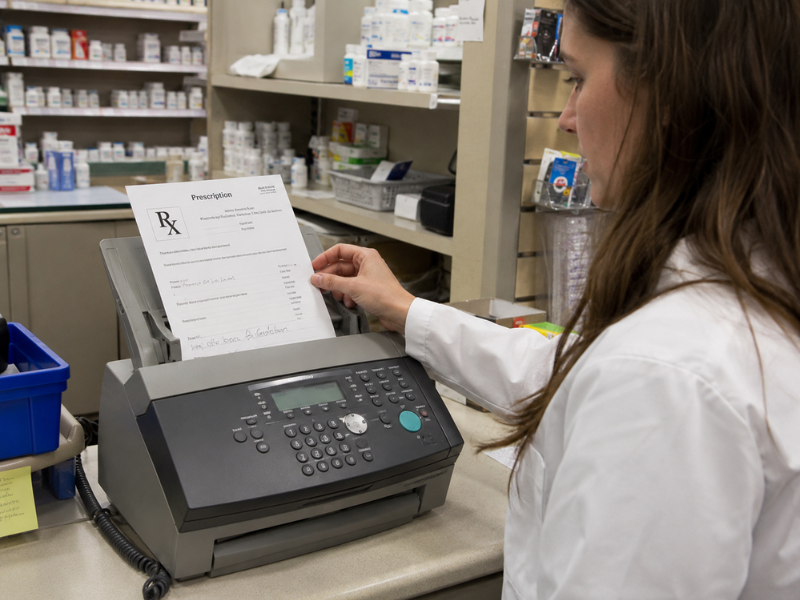
Pharmacies remain connected to several fax-dependent workflows, which is why fax has not disappeared despite the widespread adoption of e-prescribing systems. Electronic prescribing networks now handle most prescription exchanges between prescribers and pharmacies. Even so, fax remains in use for certain communications, including prescription clarifications, renewal requests, and documents that do not fit standard e-prescribing channels.
Fax also remains common for administrative workflows between pharmacies, prescribers, insurers, and pharmacy benefit managers. Prior authorization requests, coverage documentation, and medication clarification forms may still be exchanged by fax when organizations lack compatible electronic workflows or when payer processes require it.
Related Read: How to Fax a Prescription to a Pharmacy

Is Faxing Still HIPAA Compliant in 2026?
Yes, when it’s handled correctly. HIPAA does not require healthcare organizations to use a specific communication technology. Instead, it requires the covered entities and their business associates to apply reasonable safeguards to protect protected health information (PHI).
The United States Department of Health and Human Services (HHS) has also confirmed that healthcare providers may share PHI through fax when appropriate safeguards are in place. What has changed is how fax fits into modern healthcare workflows.
Regulations such as the CMS Interoperability and Prior Authorization Final Rule are accelerating the adoption of electronic data exchange and API-based prior authorization processes, with key requirements taking effect through 2027. At the same time, telecom providers continue to modernize legacy phone infrastructure, creating a shift away from traditional fax machines toward internet-based fax solutions.
The compliance considerations remain the same: protect PHI throughout the entire fax workflow. A compliant healthcare fax solution should support safeguards such as encryption in transit and at rest, signed Business Associate Agreements, role-based access controls, audit logs, and delivery tracking to help organizations maintain accountability and demonstrate compliance.
Key Takeaway
Fax persists in healthcare because it remains a practical, HIPAA-manageable fallback for exchanging documents where interoperability is still incomplete, especially for referrals and prior authorizations. The more realistic near-term move for many practices is to replace physical fax machines with a secure HIPAA-compliant fax service, while gradually shifting eligible workflows to interoperable digital exchange.
Where Online Fax Fits Into the Transition
Most healthcare organizations are actually moving in this direction. Not away from fax, but away from the machine itself. Cloud-based healthcare fax lets a clinic retain the compatibility that fax numbers provide while gaining encryption, audit trails, and EHR or practice management integrations that a traditional fax line never offered.
Platforms built specifically for regulated industries, such as iFax, offer solutions that address that need: HIPAA compliance, a signed BAA, seamless EHR integration, and proper safeguards to protect PHI.
For practices that still rely on fax, iFax modernizes fax processes while maintaining the familiar workflow.